
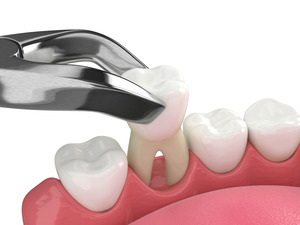
The steps that your dentist recommends for addressing gum disease can vary depending on the severity of the condition. In some cases, you may be told that a tooth extraction is required. Some patients assume that removing teeth helps get rid of the infection in the gums, but is this actually the case? Here’s a brief look at the true purpose of a tooth extraction for individuals with gum disease.
What is Gum Disease?
Gum disease occurs when the bacteria that form plaque and tartar start attacking the soft tissues around your teeth, causing an infection. The earliest form of gum disease is gingivitis, which is a relatively mild oral health issue that can sometimes be reversed with good oral hygiene habits. Over time, though, gingivitis can eventually turn into a much more severe condition called periodontitis. When left untreated, periodontitis can lead to serious consequences such as gum recession and tooth loss.
Does Having a Tooth Extraction Stop Gum Disease?
The fact of the matter is that tooth extractions do not actually help stop gum disease. The infection is present in the gums, not the teeth; therefore, removing a tooth does nothing to address the underlying problem.
So Why Might a Tooth Extraction Be Necessary?
While tooth extraction may not cure your gum disease, it may be essential for protecting your oral health. When gum disease turns into periodontitis, it can significantly damage the tissues responsible for holding your teeth in place. As a result, some of your teeth may come loose, which can have a negative impact on your ability to bite and chew your food. If a loose tooth can no longer be saved, your dentist may be left with no choice but to remove it.
How Can Gum Disease Be Treated?
If a tooth extraction won’t stop your gum disease, how can you address the issue? In many cases, the problem can be treated via a deep cleaning procedure known as scaling and root planing. Scaling is when plaque and tartar are gently removed from the area around and below the gumline, thus getting rid of much of the bacteria contributing to gum disease. Meanwhile, root planing involves smoothing out the tooth roots; this can help the gum tissue heal and reattach to the teeth.
It should be noted that once gum disease reaches the periodontitis stage, it can no longer be cured entirely. However, with the right treatments, your dentist can stop it from growing worse, thereby protecting your oral health in the long term.
In short, if you have advanced gum disease, a tooth extraction may be necessary to keep the rest of your smile safe. However, other forms of treatment will be required to get the underlying problem under control and improve the health of your gums.
About the Practice
At Center One Dental, our team always puts our patients’ unique needs first while bringing them the high-quality dental care they deserve. Led by Dr. Raj Vekariya, we provide a comprehensive menu of dental services that includes extractions for compromised teeth and scaling and root planing for gum disease. If you’re concerned about inflamed or bleeding gums, you can schedule an appointment at our practice in Canonsburg by visiting our website or calling (724) 300-3700.