
Center One Dental Family & Cosmetic Dentistry
Teeth are one of the strongest substances in the human body, but unfortunately, that doesn’t make them invincible. Hard impacts or a lifetime of wear and tear can cause significant damage. Any resulting cracks and chips weaken the tooth’s structure, making it more vulnerable to further breakage and infectious bacteria. Instead of extracting the troubled tooth, we may be able to preserve it with a dental crown. Call our team today to request an appointment and protect your oral health!
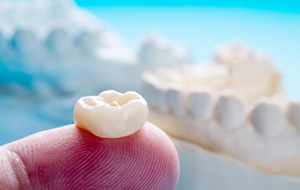
If you were to pick up a dental crown, it would look like a hollowed-out cap designed to fit over a tooth. And in many ways, that’s exactly what it is! The idea is to cover weakened, damaged teeth with durable materials that will both keep the tooth’s structure intact and protect it from further breakage.
At Center One Dental, we use aesthetically seamless material options like resin, porcelain, and ceramic, as well as cost-effective stainless steel.

The process of getting a dental crown in Canonsburg starts with a consultation. Dr. Raj will meet with you to review your health history, examine your cracked or chipped pearly white, and confirm the details of your treatment plan. Once everything is “set in stone,” Dr. Raj will take digital impressions of your mouth and coordinate with a local dental lab to have your permanent crown customized.
It takes about two weeks to craft a perfectly personalized dental crown, and in the meantime, Dr. Raj will provide you with a temporary crown to help keep your tooth protected. As soon as we receive the permanent version from the dental lab, we’ll call you back to the office so you can have your final restoration placed.

A dental crown can benefit your smile in a number of ways, including (but not limited to):

Dental crowns can help to build up and protect damaged teeth from enduring additional harm. Since every case is a little bit different and crowns are fully customizable, the price can vary from patient to patient. During your consultation, we will go over the estimated cost of your treatment so that you don’t run into any surprises. Until then, here are some things for you to take into consideration.
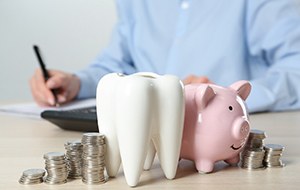
There are various factors that contribute to the cost of dental crowns. Here are some of the most prominent ones.

Dental crowns are usually considered to be a major restorative treatment by dental insurance providers. This means that they are usually covered at about 50% after the annual deductible has been met and before the maximum has been exceeded. However, every plan is a little bit different, so it is best to reach out to your provider directly so that you don’t run into any surprises. At Center One Dental, we are proud to be in-network with numerous dental insurance plans, including United Concordia, MetLife, Aetna, Cigna, Delta, and Guardian. If you have questions or concerns regarding your plan and what it covers, talk to one of our friendly team members.

If you don’t have dental insurance, this doesn’t mean that you are completely out of luck. We are also happy to accept payments through CareCredit - a third-party financing company can split the cost of your treatment into manageable monthly installments with little to no interest. If you have any questions or need help applying, don’t hesitate to give us a call!
Although they’re technically not permanent, dental crowns are definitely a long-term tooth repair solution. On average, most crowns can protect your teeth anywhere between five and 15 years.
When your dentist reshapes your teeth for a dental crown, please be aware that this procedure is irreversible. That’s because tooth enamel can’t grow back, so your tooth will always need a crown for protection moving forward.
Crowns are designed to protect the underlying tooth from additional damage and help it survive much longer than it would have, had it not been treated. You can keep your crown in excellent condition for many years to come by taking good care of it with daily oral hygiene, regular dental check-ups, and by wearing a mouthguard or nightguard if you play sports or grind your teeth.
The average dental crown lasts between five and 15 years, but this can vary depending on the material it’s made of. Generally, metal crowns have a slightly longer lifespan than metal-free crowns, but more so than the material their longevity depends on induvial factors like your diet, oral hygiene, and if you have any bad oral habits like smoking, nail-biting, and teeth grinding.
Crowns on front teeth may last slightly longer than molars as they’re not subjected to as much wear and tear from chewing as back teeth are.
While the only way to know for sure whether your crown needs replacement is to have X-rays taken or have the tooth visually examined by your dentist, there are some important warning signs that may indicate it’s nearing the end of its lifespan, including:
While it is technically impossible for a dental crown to develop cavities, the tooth underneath it still can. In fact, a crowned tooth has approximately the same risk of decay as an uncrowned tooth.
Poor oral hygiene allows bacteria and plaque to form around the gumline where the tooth meets the crown. They can then easily travel underneath the crown, wreaking havoc on the underlying tooth.
You can prevent cavities in crowned teeth the same way you’d prevent cavities in any other teeth: by daily brushing and flossing, regular dental check-ups and cleanings, and eating a low sugar diet.