
Center One Dental Family & Cosmetic Dentistry
 If you’re missing most or all of your teeth, dentures are a way to fill the gaps in your smile quickly and easily. You’ll be able to eat, talk, and smile with a level of confidence you might not have been able to for a long time!
Considering the ease and affordability of dentures, there’s no reason to hesitate if you’re trying to bring back your best smile. Reach out to the team here at Center One Dental in Canonsburg, PA and we’ll be happy to show you what this treatment can do.

Dentures can help almost anyone with missing teeth achieve beautiful and complete smiles, but you’ll need to schedule a consultation at our Canonsburg office to know for sure if they can be a suitable treatment for you. If Dr. Vekariya determines that you aren’t a good denture candidate yet, you may be able to become one later after undergoing preliminary treatments like gum disease therapy or bone grafts. Here’s a brief guide to who may be able to benefit from these remarkable dental appliances.
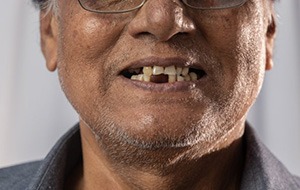
The American College of Prosthodontists reports that the most common causes of tooth loss are tooth decay, gum disease, and injury, and living with missing teeth can lead to a range of oral health problems. After a tooth is lost, the bone structure that supported it begins to recede due to lack of exercise, and this can pull the neighboring teeth out of alignment, making them harder to clean and easier to injure. Tooth loss also leaves the gums exposed to injury by food debris within the mouth. Missing teeth can also leave a patient with unsightly facial sagging, difficulty eating and speaking, and diminished self-esteem.

You may be an excellent candidate for dentures if you have lost many teeth, deal with severe dental sensitivity, or have extensive tooth decay as long as you have sufficiently healthy gums and jawbones and can commit to the excellent oral hygiene practices necessary to keep your mouth and prosthetic appliance in great shape. The number of teeth you are missing will determine whether you can be served best with partial, full, or implant dentures. These appliances are also generally more affordable than other tooth replacement options, so they can be an especially excellent treatment for patients on a budget.
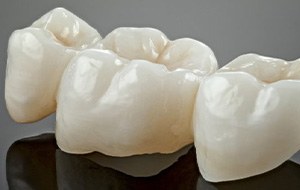
If dentures aren’t a suitable tooth replacement treatment for you, you may be able to benefit from another dental prosthetic appliance. A few options include:
Dental bridges: These appliances are one or several artificial teeth strung together and supported by either dental crowns placed on the teeth on either side of the gap or dental implants surgically inserted into and fused with the jawbone. They can be great for patients who are missing several teeth in a row and can last up to fifteen years if they receive excellent care.
Dental implants: These small titanium posts are placed directly into the jaw and fused with the surrounding bone tissue through the natural process of osseointegration. This creates the sturdy foundation a restoration like a dental crown, bridge, or denture needs for maximum stability and chewing power.
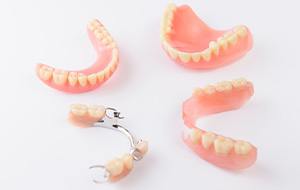
There are several kinds of dentures, each with their own benefits and use case. If you’re curious, here’s what you should know about each of them.
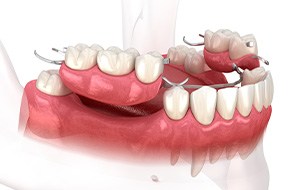
Partial dentures are designed to replace one or more missing teeth while preserving the remaining natural teeth. They're typically made with a metal that holds the artificial teeth in place. Ideal for individuals who still have some healthy teeth, they help restore function and appearance without the need for full dentures.
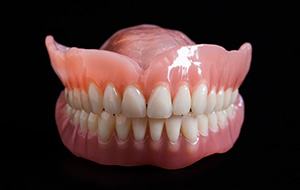
Full dentures are designed for individuals who have lost all their teeth in either the upper or lower jaw, or both. They're custom-made from acrylic or resin materials to fit snugly over the gums. Full dentures restore the ability to chew, speak, and smile confidently, providing full-mouth tooth replacement for complete tooth loss.
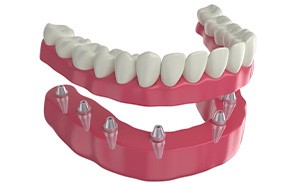
Implant dentures are anchored to dental implants surgically placed into the jawbone, offering enhanced stability compared to traditional dentures. Made from durable materials like porcelain or acrylic, they’re ideal for individuals with sufficient bone structure who want a more permanent, secure solution for missing teeth. Implant dentures improve chewing efficiency and prevent bone loss over time.

Dentures offer several benefits for individuals with missing teeth. First, they restore the ability to chew and speak more effectively, which can improve overall quality of life. By filling the gaps left by missing teeth, dentures also enhance your smile and facial appearance, helping prevent the sunken look that often occurs with tooth loss.
Dentures are custom-made to fit comfortably and can be easily removed for cleaning, making them a convenient option for maintaining oral hygiene. They also provide a more affordable alternative to dental implants or bridges, especially for those needing multiple teeth replaced. With proper care, dentures can last for many years, offering a reliable and non-invasive solution for tooth replacement.
If you have any questions about what dentures could do for you, reach out to us for a consultation today!
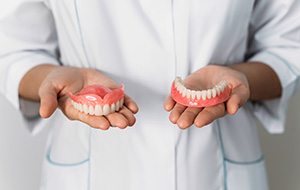
There are many factors that go into determining the cost of your new dentures, including the number of teeth you’re missing, your oral health, and the materials used for your prosthetic. Because no two smiles are identical, the only way to truly determine the exact cost of dentures is to visit Dr. Vekariya for a consultation. If you’re curious about how we determine the price of this restoration, please continue reading below for more information.
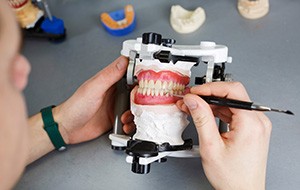
There are three major factors that will influence the cost of your affordable dentures near Canonsburg:
It’s very important to remember that when it comes to your dentures, cheapest doesn’t mean best. For “bargain” dentures, it’s likely your prosthetic will be made with sub-par acrylic for the teeth, increasing their risk of damage and requiring more frequent replacement. Not to mention, quality matters when it comes to what goes in your mouth!
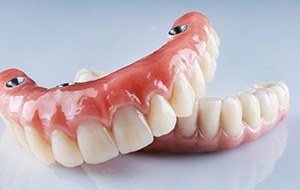
Yes, implant dentures are more expensive than traditional dentures; however, this is for a very good reason. Unlike traditional dentures, implant dentures secure in place to your jaw via a series of four to six permanent dental implants. This allows for a more stable grip so you can enjoy a full diet without the fear of your prosthetics slipping while you chew. Furthermore, because they’re so secure, you’ll enjoy the confidence of a complete smile that nobody will know isn’t your real teeth!
While implant dentures do cost more up front, they are an investment that will pay dividends with time. While traditional prosthetics only last five to seven years, dental implants can last much longer: possibly even a lifetime!
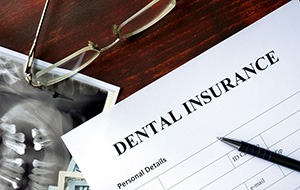
Yes, most dental insurance companies consider dentures a “major procedure” and thus will typically cover around 50% of their cost. At Center One Dental, our team will be happy to assist you in confirming your coverage before your denture treatment begins.

In addition to being in-network for all PPO dental insurance plans, Center One Dental is proud to accept payment plans through our preferred third-party financier, CareCredit. This program allows you to break up the cost of your dentures into multiple, low-to-no interest monthly payments. To learn more about CareCredit, please visit our website.
We can’t wait to help restore your beautiful smile with a durable, natural looking pair of dentures. To learn more about the cost of treatment, please schedule a consultation with Dr. Vekariya today!
Dentures are very durable, but they aren’t made to last forever. They can last anywhere from five to seven years when you care for them properly. However, accidents can happen. Dropping dentures when cleaning, inserting, and removing them is a common reason for them to become damaged. Dentures can also fracture if they don’t fit properly or have tiny defects. Even if you take excellent care of your dentures, they can get worn down over time. If your dentures are damaged, let us know so we can help.
Dentists usually recommend taking dentures out at night when you get to bed. When you first get your dentures, you will typically be told to keep it in your mouth for 24 hours, including when you sleep. After this, you should be taking them out every night. This is because dentures restrict the circulation in the gums, leading to soft tissue irritation and speeding up ridge resorption. Taking the dentures out gives the gums a chance to recover and get the nutrients they need.
If you need to have your teeth extracted before you get dentures, you are likely to experience some discomfort after the oral surgery. Take your prescribed and over-the-counter pain relievers as directed, and your discomfort should improve after a few days. Some patients experience minor irritation when they first get their dentures, but this is temporary. If discomfort persists, let us know so we can see if there is an issue going on.
Bacteria can become trapped in the different crevices in your dentures, especially if they don’t fit properly. Ill-fitting dentures irritate soft gum tissue, potentially leading to sores and infections that can contribute to bad breath. Denture wearers also tend to produce less saliva, leading to dry mouth. This allows harmful bacteria to thrive, resulting in bad breath. You can avoid bad breath by cleaning your dentures every day with a soft-bristled toothbrush and specialized cleaner. Brush your entire mouth, including your gums, tongue, cheeks, and palate. Soak your dentures in a disinfecting solution every night to keep them moist and get rid of bacteria. Rinse your dentures after every meal to get rid of food particles and prevent bacteria accumulation.