
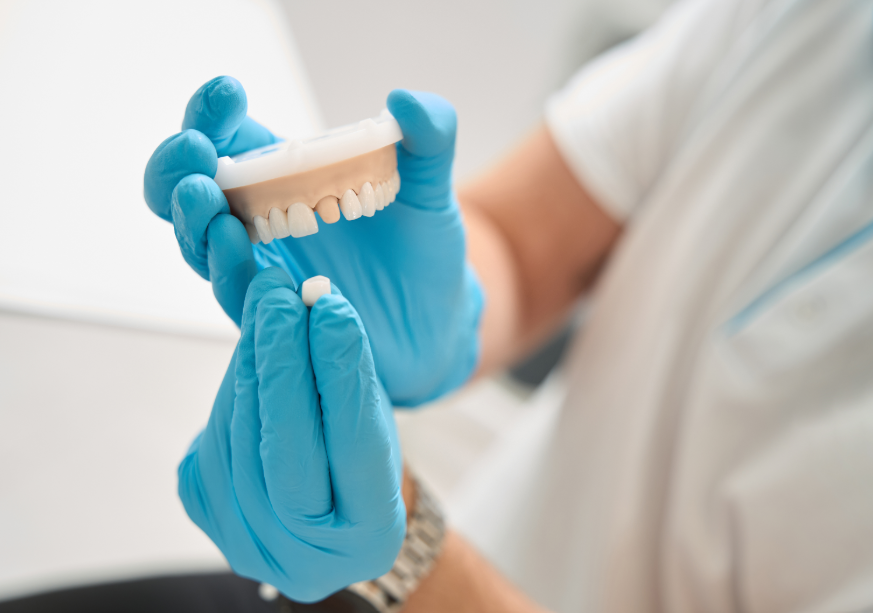
For much of human history, a severely damaged tooth usually meant one thing: extraction. Without modern dental tools or restorative techniques, removing a tooth was often the simplest way to deal with pain or infection. Fortunately, dentistry has evolved dramatically over the centuries. Today, dental crowns allow dentists to protect and preserve damaged teeth rather than remove them.
The journey from early tooth restorations to the modern dental crown is a fascinating story of innovation, craftsmanship, and a growing focus on preserving natural teeth whenever possible.
Early Dental Restorations in Ancient Civilizations
The concept of covering or restoring damaged teeth dates back thousands of years. Archaeological evidence suggests that early forms of dental crowns were used by the Etruscans in ancient Italy as early as 700 BCE. These early dental pioneers created crowns and bridges using gold bands and wires to secure replacement teeth or protect damaged ones.
Gold was one of the earliest materials used because it was relatively easy to shape and resistant to corrosion. While these restorations were far less advanced than today’s crowns, they demonstrated an early understanding of dental preservation and function.
Similar restorative techniques have also been found in ancient Roman and Egyptian cultures, showing that people have long sought ways to repair and maintain their smiles.
The Shift Away from Extraction
For centuries, dentistry focused primarily on removing damaged or infected teeth. Extractions were often the quickest and most reliable solution when a tooth caused pain or decay.
However, as dental science advanced in the 18th and 19th centuries, dentists began exploring ways to repair teeth instead of removing them. Early dental crowns began to emerge during this time, often made from gold or porcelain materials that were crafted individually for each patient.
These early restorations were labor-intensive and required significant skill to design and place, but they marked an important shift toward preserving natural teeth whenever possible.
Advancements in Materials and Technology
The 20th century brought major advancements in dental materials and technology, dramatically improving the effectiveness and appearance of dental crowns.
Porcelain crowns became more widely used because they could closely match the color and shape of natural teeth. Later, porcelain-fused-to-metal crowns combined the strength of metal with the aesthetic benefits of porcelain, offering both durability and a natural appearance.
As dental technology continued to evolve, additional materials such as ceramic and zirconia were introduced. These modern options provide exceptional strength, lifelike appearance, and improved longevity, allowing crowns to blend seamlessly with surrounding teeth.
Digital imaging and computer-aided design have also transformed the way crowns are created, allowing for more precise and comfortable restorations than ever before.
How Modern Crowns Protect and Preserve Teeth
Today, dental crowns play an essential role in restorative dentistry. Rather than removing a tooth that has been weakened by decay, fractures, or large fillings, dentists can place a crown to protect and reinforce the remaining structure.
A crown acts like a protective cap that covers the entire visible portion of the tooth. It restores strength, improves function, and enhances the appearance of the smile.
Crowns are commonly used after root canal treatment, to repair cracked or worn teeth, or to support large restorations. With proper care, many crowns can last for many years while allowing patients to maintain their natural teeth.
Modern dentistry focuses strongly on preservation whenever possible—and dental crowns are a perfect example of how far that philosophy has come.
Dental crowns have come a long way from their ancient origins, evolving into one of the most reliable ways to protect and preserve natural teeth.
About the Practice
Patients in Canonsburg and surrounding areas love Center One Dental for crowns and more! Our practice has a long history of preserving healthy smiles. Dr. Raj Vekariya offers a wide range of preventive, cosmetic, and restorative treatments designed to meet the needs of each individual patient. Our experienced dental team utilizes modern techniques and materials to create durable, natural-looking restorations, including traditional dental crowns.
Call us at (724) 300-3700 or schedule your appointment online.